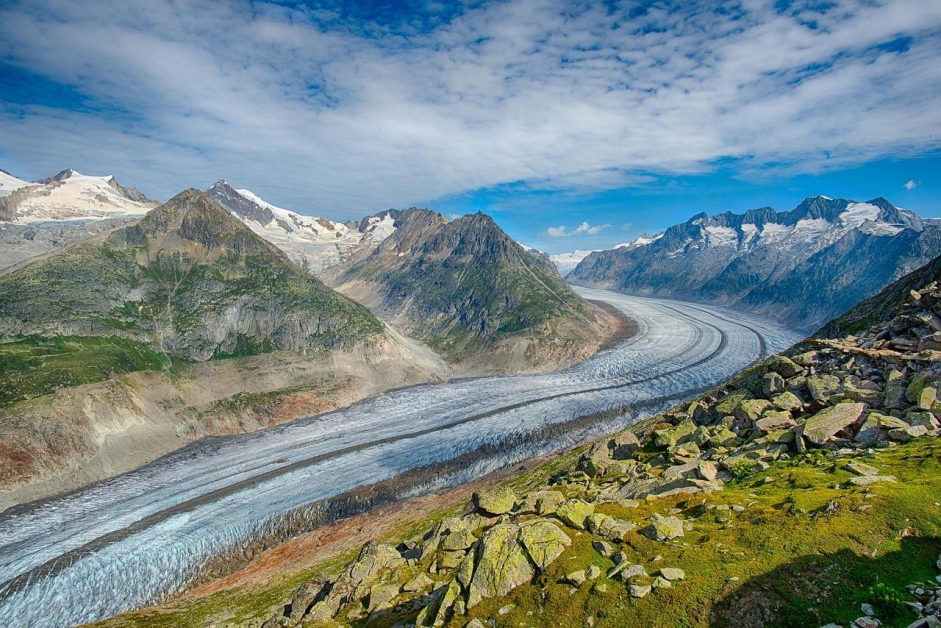
From doctored data to artfully trimmed timelines, misinformation doesn’t always arrive as an outright lie-it often hides in the fine print, the framing, or what’s conveniently left unsaid. In this listicle, we’ll explore a small range of these “Mountains of Misrepresentation”: 3-4 distinct ways information gets twisted just enough to change how we see the world.
You’ll see how each type of misrepresentation works, why it’s so persuasive, and where it most often appears-in media, marketing, politics, and everyday conversations. By the end, you’ll be better equipped to spot these patterns, question the stories placed in front of you, and navigate information with a sharper, more critical eye.
Nothing says “you can do anything” like the silhouette of the world’s highest peak slapped on a box, bottle, or banner. By borrowing this summit, marketers quietly promise oxygen‑thin performance: energy drinks that will push you “to the top,” apps that claim to “elevate every moment,” and gadgets that swear to “peak‑optimize” your life. In reality, most of these offerings never leave base camp. The imagery suggests extreme endurance and rarefied achievement, yet what’s inside is usually a mild formulation, a minor software tweak, or a recycled feature dressed in alpine blue.
- Implied toughness: Rugged silhouettes hint at durability that everyday plastic can’t deliver.
- Borrowed heroism: Climbers’ courage is quietly transferred to the consumer with a single logo.
- Silent disclaimers: Fine print anchors the promise firmly back at sea level.
| Visual Cue | Suggested Promise | Everyday Reality |
|---|---|---|
| Snow‑capped peak | “Limitless” performance | Standard functionality |
| Climber silhouette | Elite endurance | Short‑term boost |
| Thin, crisp skyline | Ultra‑precision | Average reliability |
Q&A
Mountains of Misrepresentation: Questions & Answers
What does “Mountains of Misrepresentation” actually mean?
The phrase “Mountains of Misrepresentation” refers to the massive, layered build‑up of misleading information that obscures reality, much like a towering mountain range can hide what lies behind it. These “mountains” can be:
- Media distortions that sensationalize or oversimplify complex issues
- Statistical tricks that reframe numbers to support a desired narrative
- Corporate or political spin that selectively highlights or hides facts
- Cultural myths that get repeated until they feel true
Rather than a single, obvious lie, misrepresentation becomes a landscape of partial truths, omissions, and reframing that together create a powerful-yet often inaccurate-picture of the world.
How is misrepresentation different from an outright lie?
Misrepresentation lives in the grey areas between truth and falsehood. Instead of stating something that is clearly untrue, it often:
- Emphasizes one slice of truth while ignoring the rest
- Uses technically correct facts in a misleading context
- Relies on ambiguous wording that allows multiple interpretations
- Frames information emotionally so that feelings override facts
An outright lie is easier to detect and disprove. Misrepresentation is subtler; it bends reality just enough to shift perceptions while still appearing reasonable on the surface.
Why are “mountains” a useful metaphor for misrepresentation?
Mountains capture several features of how misrepresentation works:
- Scale – It’s not one misleading claim, but many stacked together over time.
- Inaccessibility – Reaching the “other side” of an issue can feel like a difficult climb.
- Erosion and layering – Old myths erode partially, but new layers of spin accumulate on top.
- Perspective – From one side, a mountain looks completely different than from another, just as the same data supports conflicting narratives depending on the viewer’s angle.
The metaphor invites us to think not only about individual claims, but about the towering structures of belief that are built over years through repetition, storytelling, and selective visibility.
Where do we most commonly encounter these “mountains” today?
Misrepresentation appears wherever attention, power, and profit are at stake. Common terrains include:
- News and social media – Headlines, thumbnails, and sound bites optimized for clicks.
- Politics – Campaign slogans, talking points, and “spin rooms” designed to control the narrative.
- Advertising – Product claims that highlight benefits and obscure trade‑offs.
- Corporate communication – Annual reports, crisis statements, and sustainability pledges.
- Personal branding – Curated online identities that present an edited version of reality.
In each of these spaces, the incentive is not always to inform accurately but to persuade, reassure, or entertain-fertile ground for misrepresentation to grow.
How do numbers and statistics contribute to misrepresentation?
Numbers feel concrete and authoritative, but they can be arranged to construct very different mountains of meaning. Common tactics include:
- Selective baselines – Choosing a starting point that exaggerates growth or decline.
- Relative vs. absolute figures – Saying something “doubled” without noting it rose from 1 to 2.
- Cherry‑picked time frames – Highlighting a short‑term spike and ignoring long‑term stability.
- Omitting denominators – Reporting a raw count with no sense of population or scale.
- Graph manipulation – Cropped axes, distorted proportions, and suggestive visuals.
The issue is rarely the data itself but the story wrapped around it. Misrepresentation turns statistics from tools of understanding into props for persuasion.
Are misrepresentations always intentional?
Not necessarily. Misrepresentation can arise from:
- Deliberate strategy – Crafting messages to mislead or obscure responsibility.
- Cognitive bias – Honest people interpreting information in ways that confirm their views.
- Oversimplification – Condensing complex topics into formats too small to hold nuance.
- Second‑hand retelling – Repeated summaries that gradually distort the original message.
Intent matters ethically, but even unintentional misrepresentation can mislead on a large scale once it spreads through networks and institutions.
What psychological tendencies make us vulnerable to misrepresentation?
Our minds are not neutral measuring instruments; they come with built‑in shortcuts. Among the most relevant are:
- Confirmation bias – We notice and remember information that supports what we already believe.
- Availability heuristic – Vivid stories feel more common than dry statistics.
- Anchoring – The first piece of information we hear becomes a reference point for all that follows.
- Social proof – If many people repeat a claim, it begins to seem more credible.
- Emotional reasoning – Strong feelings can override careful analysis.
Misrepresentations that align with these tendencies are more likely to stick, turning small distortions into towering misconceptions.
How do images and visuals build mountains of misrepresentation?
Visuals bypass some of our verbal skepticism and speak directly to intuition. They can shape perception through:
- Selective framing – Cropping out context that would change the interpretation.
- Symbolic associations – Pairing certain groups or ideas with specific colors, settings, or moods.
- Staged authenticity – Carefully arranged “candid” scenes that appear spontaneous.
- Repetition – Showing similar images so often that they define what we think is “normal.”
Over time, these visuals accumulate into a familiar landscape of expectations, which can be as misleading as any textual distortion.
What role does language play in subtle misrepresentation?
Language shapes how we categorize and evaluate the world. Misrepresentation often hides in:
- Euphemisms – Softening reality (e.g., “collateral damage” instead of civilian casualties).
- Passive voice – Avoiding responsibility (“mistakes were made”).
- Loaded terms – Words that carry emotional weight beyond their literal meaning.
- False balance – Phrasing that suggests equal validity for unequally supported views.
The words used to describe an event can raise or lower its perceived importance, guilt, or urgency without altering any underlying facts.
Can personal stories be a form of misrepresentation?
Personal narratives are powerful and often sincere, but they can still misrepresent broader realities. This happens when:
- Anecdotes are treated as trends – Assuming “my experience” equals “most people’s experience.”
- Exceptional cases dominate – Rare events receive attention out of proportion to their frequency.
- Context is lost – Structural or historical factors are omitted from personal accounts.
Stories are indispensable for understanding human experience, yet they must be balanced with data and context to avoid building mountains from molehills.
How do “mountains of misrepresentation” affect public trust?
As people encounter contradictory claims and shifting narratives, several reactions emerge:
- Cynicism – Believing that everyone is lying, so nothing is worth trusting.
- Tribal loyalty – Trusting only information from one’s own group or preferred sources.
- Information fatigue – Withdrawing from engagement because sorting truth from spin feels exhausting.
Over time, this erosion of trust can weaken institutions, polarize societies, and make collective problem‑solving much harder.
Is it possible to avoid misrepresentation entirely?
Complete avoidance is unlikely. Every description of reality involves selection and framing. However, there is a meaningful difference between:
- Good‑faith simplification – Clarifying complex issues while acknowledging limits and uncertainty.
- Bad‑faith distortion – Simplifying in ways that strategically mislead or conceal.
The goal is not perfect objectivity, but conscious, transparent representation: being explicit about what is known, what is assumed, and what is left out.
What practical steps can individuals take to navigate these mountains?
While no one can fact‑check everything, certain habits make misrepresentation easier to spot:
- Pause at emotional peaks – Strong reactions are signals to examine claims more closely.
- Trace the source – Look for where the information originated, not just who is repeating it.
- Compare multiple perspectives – Read from different outlets, regions, or viewpoints.
- Inspect the framing – Ask what was left out, what baseline was chosen, and what alternatives exist.
- Differentiate data from commentary – Separate the underlying facts from the story built on top.
These practices do not flatten the mountains, but they provide better maps and more reliable climbing gear.
What responsibilities do institutions have in reducing misrepresentation?
Institutions-media organizations, governments, corporations, schools-play a central role in shaping shared reality. Their responsibilities include:
- Transparent methodology – Explaining how numbers are gathered and what their limits are.
- Clear corrections – Publicly acknowledging and rectifying errors.
- Contextual reporting – Avoiding data fragments without background.
- Ethical guidelines – Establishing and enforcing norms against deceptive practices.
When institutions prioritize clarity over convenience, they help lower the height of the collective mountain range, making reality more accessible to everyone.
Can misrepresentation ever serve a positive purpose?
Some argue that selective framing can be justified for:
- Public health campaigns – Emphasizing certain risks to encourage beneficial behavior.
- Conflict de‑escalation – Softening rhetoric to prevent violence or panic.
- Privacy protection – Withholding sensitive details to protect individuals.
Yet these cases raise difficult ethical questions: Who decides which distortions are acceptable, and how do we guard against the slide from protective framing into manipulative spin?
How might we begin dismantling the “mountains of misrepresentation” we already have?
Dismantling is a long‑term process, more like erosion than demolition. It involves:
- Historical inquiry – Examining how certain stories and statistics became dominant.
- Media literacy education – Teaching people to recognize common patterns of distortion.
- Open data practices – Making raw information accessible for independent analysis.
- Cross‑disciplinary dialogue – Bringing different kinds of expertise to the same questions.
Each act of careful questioning chips away at accumulated misconceptions, revealing a more nuanced and navigable landscape beneath.
What does it mean to practice “humble certainty” in the face of misrepresentation?
“Humble certainty” is a stance that combines confidence in well‑supported knowledge with awareness of its limits. It looks like:
- Stating what you know while being clear about how you know it.
- Admitting uncertainty without sliding into total relativism.
- Updating beliefs when better evidence appears.
In a world of mountains, humble certainty is not about having a perfect view from the summit; it is about choosing reliable paths, acknowledging blind spots, and being willing to adjust your route as the fog clears.
Key Takeaways
In the end, these mountains of misrepresentation are less about geography and more about perception. What we choose to name, highlight, and repeat can quietly reshape reality until rumor hardens into rock.
Stepping back from the peaks, the landscape looks different. Some ridges crumble under closer inspection; others, long ignored, rise into view. The map is not the territory, and the stories we tell about places-and about people-are never the whole terrain.
As you return to your own daily elevations and lowlands, keep an eye on the contours of the claims around you. Ask what’s beneath the surface, who drew the borders, and whose footsteps never made it onto the official trail. Misrepresentation may loom large, but it’s always possible to redraw the lines.